


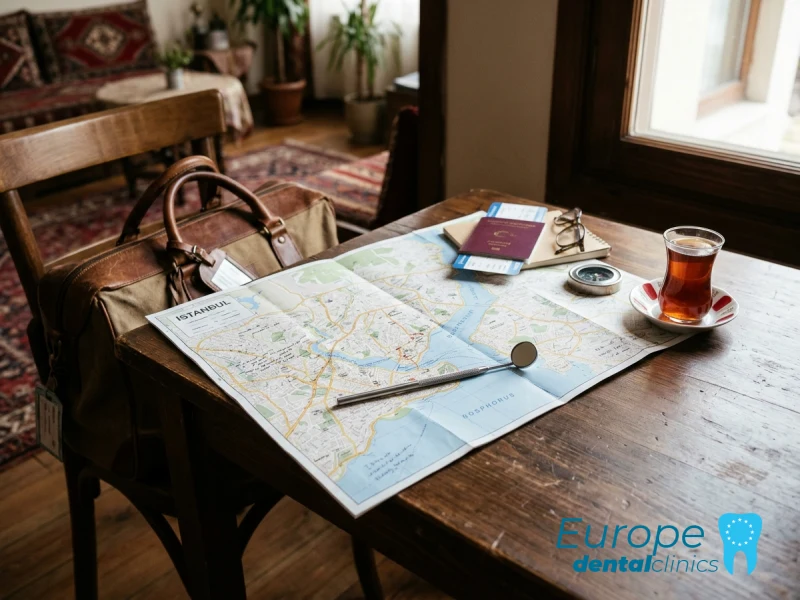
Planning dental tourism recovery in Istanbul starts before you book your flights. Your treatment, medical history and access to care at home all affect how long you should stay and what support you may need. For European patients travelling to Turkey, a safe plan includes time for assessment, recovery, review appointments and unexpected changes.
Match Your Recovery Plan to Your Dental Treatment
A filling, a veneer preparation and dental implant surgery involve different recovery needs. Ask your dentist to explain the likely discomfort, eating restrictions and review schedule for your specific procedure.
Allow for surgical and restorative stages
After extractions or implant placement, swelling, bruising and tenderness can affect daily activities. Crowns and veneers may cause temporary sensitivity or require bite adjustments. Implant treatment can involve several visits separated by months of healing; an initial trip does not necessarily complete treatment.
Explore our dental treatment options, discover our clinic locations and meet our dentists for further information.
Complete Your Assessment Before Committing to Travel
An online consultation can help with initial planning, but photographs cannot replace a clinical examination. Your final treatment plan may change after examination and appropriate imaging in Istanbul.
Share your medical history, allergies and current medicines, including blood thinners and supplements. Mention diabetes, smoking, previous healing problems and any history of gum disease. Do not stop prescribed medication unless the clinician responsible for it advises you to do so.
Build Flexibility into Your Istanbul Stay
Avoid planning your return flight around the earliest possible completion date. Ask the treating dentist how much time your procedure requires, when they will review you and what findings could delay your departure.
Choose accommodation with easy access to the clinic and space to rest. Flexible travel arrangements can reduce pressure if you need another appointment. Extensive sightseeing, strenuous exercise and late nights may be unsuitable during early recovery, particularly after surgery.
Arrange practical support
If sedation is planned, confirm escort and supervision requirements before travelling. Ask whether a companion should stay with you afterwards. Do not assume a hotel transfer provides the same support as a responsible adult who can help during recovery.
Understand Risks, Alternatives and Consent
Informed consent should cover the proposed treatment, alternatives, expected benefits and possible complications in language you understand. These may include infection, bleeding, sensitivity, nerve injury or implant failure, depending on the procedure.
Discuss conservative options, such as monitoring, orthodontics or repairing existing restorations, where appropriate. Preparing healthy teeth for crowns or veneers can involve irreversible tissue removal. Allow time to consider any revised plan before agreeing, especially if more extensive treatment is proposed after arrival.
Prepare for Eating, Hygiene and Pain Relief
Before treatment, obtain written aftercare instructions and check that you can access suitable food near your accommodation. Your dentist should explain when to brush the treated area, whether rinses are needed and which activities to avoid.
Confirm which pain medicines are suitable for you and how to take them. Antibiotics are not necessary for every dental procedure and should only be used as prescribed.
Arrange Follow-up Before Leaving Home
Identify who will handle routine checks and urgent problems after your return. Ask your home dentist about availability and fees; overseas treatment does not automatically include local aftercare. Request copies of your treatment records and a clear contact route for the Istanbul clinic throughout your recovery.
Recognise Symptoms That Need Urgent Attention
Some discomfort can be expected after dental treatment, but symptoms should follow the recovery pattern your dentist explained. Increasing pain or swelling after initial improvement, fever, pus or a persistent unpleasant taste warrant prompt clinical advice. Severe pain several days after an extraction may indicate a complication that needs examination.
Act promptly on emergency warning signs
Difficulty breathing or swallowing, rapidly spreading swelling or heavy bleeding that does not settle with the advised measures requires urgent assessment. In Turkey, call 112 for emergency assistance. Do not wait for a routine clinic reply when symptoms suggest an emergency.
Check Your Fitness to Fly After Treatment
There is no single waiting period suitable for every dental procedure. Your dentist should assess your condition before departure, taking account of bleeding, swelling, pain control and any surgical complications. Procedures involving the upper jaw or sinus may require additional precautions and a longer delay.
Ask for specific advice if you have had a sinus lift or a suspected opening between the mouth and sinus. Airline requirements may also apply. A scheduled flight should never determine whether you are clinically ready to travel.
Budget for Recovery Beyond the Treatment Package
Your recovery budget should account for expenses that may fall outside the quoted treatment fee. These can include additional accommodation, changed flights, medicines, unplanned examinations and care after returning home.
Check insurance and financial terms carefully
Standard travel insurance may exclude planned dental treatment and complications arising from it. Ask the insurer for written confirmation of relevant cover, including emergency care and travel disruption. Read the clinic’s terms for remedial treatment, including who pays for travel and accommodation if another visit becomes necessary. A warranty does not guarantee clinical success.
Keep a Useful Record of Your Recovery
A brief daily note can help you explain changes accurately during a remote review. Record pain levels, swelling, bleeding, temperature if you feel unwell, and the medicines you have taken. Photographs taken in similar lighting may help show visible changes.
Remote advice has limits: a photograph cannot reliably assess your bite, infection beneath the gum or implant stability. If the treating team recommends an examination, arrange one promptly instead of relying on repeated messages.
Protect Healing During Your Stay
Smoking can impair wound healing and increase the risk of implant complications. Discuss support for stopping before surgery and follow advice about avoiding tobacco during recovery. Vaping should also be discussed with your dentist.
Avoid alcohol while recovering from sedation or when it interacts with prescribed medicines. Choose restful activities that fit your clinical instructions. Feeling well enough to walk around Istanbul does not necessarily mean you are ready for vigorous exercise or a full day of excursions.
Plan Maintenance After the Initial Recovery
Once discomfort settles, ongoing care still matters. Implants require cleaning around the gum margins, while crowns and veneers need monitoring for decay, gum problems and mechanical damage. Ask for a personalised maintenance schedule and instruction on suitable cleaning aids. If you grind your teeth, discuss whether a protective night guard is appropriate after your bite has been assessed.
Adapt Your Meals to the Stage of Healing
Your dentist’s instructions should guide food choices, particularly if you have stitches, extraction sockets or temporary teeth. During early healing, soft foods such as scrambled eggs, yoghurt, mashed vegetables and cooled soup may be easier to manage. Include protein and sufficient fluids to support recovery.
Protect numb tissues and surgical sites
Wait until local anaesthetic has worn off before chewing, unless your dentist advises otherwise, to reduce accidental biting of your lip or cheek. Avoid very hot drinks while sensation is reduced. After an extraction, follow instructions about avoiding suction, forceful rinsing and foods that could disturb the wound.
Look After Temporary Crowns and Bridges
Temporary restorations protect prepared teeth and help maintain appearance and function between appointments. Their material and cement may be less durable than those of the final restoration. Ask which areas you can chew on and how to clean around connected teeth without dislodging them.
If a temporary crown loosens or comes off, contact the clinic for instructions and keep it safe. Do not use household glue. An exposed prepared tooth may become sensitive, and movement of neighbouring teeth can affect the fit of the final restoration.
Allow Time to Assess Your Bite and Speech
New restorations can feel unfamiliar, especially when several teeth have changed shape. During review appointments, describe any tooth that contacts first, pain when biting or difficulty bringing your teeth together comfortably. A high contact may require adjustment rather than simply more time to settle.
Report functional concerns before departure
Changes to front teeth can temporarily affect pronunciation and lip comfort. Tell your dentist about persistent speech difficulties, cheek biting or trouble chewing. Where a trial stage is possible, use it to assess comfort and appearance before approving the final work, while recognising that later changes may be limited.
Understand Restrictions with Immediate Implant Teeth
Some patients receive a fixed temporary bridge shortly after implant placement. Although it may look complete, the implants beneath it still need time to integrate with the bone. Immediate loading is suitable only in selected cases and does not remove the need for a protected healing period.
Follow the prescribed food consistency and chewing restrictions even if the bridge feels secure. Report movement, clicking or a sudden change in how the teeth meet. Do not attempt to tighten or repair implant components yourself.
Prepare for Language and Communication Needs
Agree how you will communicate with the clinical team outside appointment hours. If you need an interpreter, establish whether one will be available for clinical discussions as well as booking arrangements. Translation apps can help with everyday exchanges but may miss the meaning of medical instructions.
Carry Medicines Correctly on Your Journey Home
Keep prescribed medicines in their original labelled packaging and carry a copy of the prescription where available. Check the rules for Turkey, your destination and any transit country, particularly for controlled medicines. Keep essential doses accessible in cabin baggage, subject to airline and airport security requirements, so a delayed suitcase does not interrupt your prescribed treatment.
Confirm How Stitches and Dressings Will Be Managed
If your procedure involves stitches, ask whether they dissolve or need removal. Dissolving stitches can remain noticeable for different lengths of time; do not pull or trim them yourself. Any protective dressing should also come with instructions about how long it should remain in place.
Establish who will check the wound if your planned departure falls before stitch removal. A loose stitch does not always mean healing has failed, but wound edges separating or bleeding restarting should be assessed by a dentist.
Adjust Recovery Arrangements to Your Individual Needs
Reduced mobility, visual impairment or difficulty managing everyday tasks can make recovery away from home more demanding. Check practical details such as lift access, bathroom arrangements and the distance between your room and transport. Request assistance before arriving rather than assuming it will be available.
Make essential instructions accessible
Ask for aftercare information in a format you can use comfortably, whether that means larger print, a translated document or instructions shared with your chosen companion. The aim is to make medication schedules and restrictions easy to follow when you are tired or uncomfortable.
Agree When Treatment Should Be Paused
A treatment schedule may need to change if tissues are inflamed, healing is slower than expected or the dentist identifies a new problem. Ask how these decisions will be made and which stages can safely wait. Clinical readiness should guide progression to the next appointment.
If you feel unwell or unable to continue comfortably, tell the dentist before the next procedure begins. Consent remains an ongoing process, and you can withdraw it. The team should explain how stopping at that stage would affect tooth protection, temporary restorations and later care.
Record the Details of Any Dental Implants
For implant treatment, request the manufacturer, implant system, component details and positions in your mouth. An implant passport or equivalent clinical record can help another dentist identify compatible parts if maintenance or repairs become necessary.
Ask whether the system has support in your home country. Access to components and clinicians familiar with the system may influence how easily future care can be arranged. Keep these details somewhere you can retrieve them years later.
Separate Clinical Photography from Marketing Consent
Photographs may form a useful part of diagnosis and treatment records. Permission to use your images in advertising or on social media is a separate matter. Read any photography forms and clarify where identifiable images might appear before agreeing.
You should be able to discuss your preferences without pressure. Ask how to raise a concern about image use and how your clinical information will be shared with professionals involved in your care.
Know How to Raise an Unresolved Concern
Request the clinic’s written complaints procedure and the name of the person responsible for responding. If a problem remains unresolved, describe the symptoms, dates and outcome you are seeking in writing. Keep copies of correspondence and relevant documents.
Urgent treatment takes priority over a complaint. Obtain necessary clinical care while pursuing administrative or financial concerns separately, and seek independent advice when responsibility or proposed remedial treatment is disputed.
Frequently asked questions
How long should I stay in Istanbul after dental treatment?
Your stay should allow time for treatment, an initial recovery period and a review before departure. Straightforward procedures may need only a short visit, while extractions, implants or extensive restorative work can require a week or longer. Ask for a written timetable that includes contingency days. Implant treatment may involve separate trips months apart because healing continues after the first visit.
When can I fly home after dental surgery in Istanbul?
The timing depends on the procedure, bleeding, swelling and any complications. Ask your treating dentist to assess you before departure and provide advice specific to your flight. Sinus lifts, sinus complications and complex surgery may require a longer delay. Choose a flexible ticket and leave time for a follow-up appointment before travelling.
What accommodation is best for recovering after dental treatment?
Choose quiet accommodation close to the clinic, with a lift, a private bathroom and easy access to suitable food and drinking water. A fridge can help with cold packs and foods that need refrigeration. Check the actual journey time to the clinic, as Istanbul traffic can make short distances slow to travel. Avoid accommodation that requires steep walks or many stairs.
Should I arrange someone to help me during recovery?
A companion is particularly useful after surgery, sedation or general anaesthesia. If you receive sedation, the clinic may require a responsible adult to escort you home and stay with you afterwards, often for 24 hours. Confirm the requirements before booking. Arrange transport in advance and keep the clinic’s daytime and out-of-hours contact details accessible.
What food and drink should I plan for after dental treatment?
Stock up on soft foods such as yoghurt, scrambled eggs, mashed vegetables and smooth soups served at a comfortable temperature. Follow your dentist’s instructions about when to eat, especially while your mouth is numb. After extractions or surgery, avoid very hot food, hard or crunchy items and drinking through a straw during the initial healing period. Drink water regularly and check whether your medicines require any dietary precautions.
How much sightseeing can I do during recovery in Istanbul?
Keep the treatment day and early recovery period quiet. Gentle walks may be manageable when you feel well, but strenuous exercise, heavy lifting, saunas and prolonged heat can worsen bleeding or swelling after surgery. Istanbul’s hills, steps and busy attractions can be tiring, so build in rest periods. Resume more demanding activities according to your dentist’s advice.
How should I organise medicines and mouth care?
Bring an up-to-date list of your medicines, allergies and medical conditions, and request written aftercare instructions in a language you understand. Take pain relief and any prescribed medicines exactly as directed; antibiotics are only appropriate when prescribed. Do not stop blood thinners or other regular medicines without advice from the clinician who manages them. Follow procedure-specific instructions for brushing, rinsing and cleaning around the treated area.
Which symptoms need urgent attention during recovery?
Some discomfort, swelling and minor oozing can occur after oral surgery, but worsening pain, fever, pus, persistent bleeding or swelling that increases after initially improving need prompt assessment. Severe pain a few days after an extraction can indicate a dry socket. Contact the clinic urgently if these symptoms occur. For difficulty breathing or swallowing, rapidly spreading swelling or severe uncontrolled bleeding, seek emergency care; Türkiye’s emergency number is 112.
What should I budget for beyond the dental treatment itself?
Allow for accommodation, suitable meals, transfers, medicines, review appointments and possible changes to your return flight. Ask which follow-up visits, adjustments and treatments for complications are included in the quoted price. Check insurance carefully, as standard travel policies often exclude planned dental treatment and related complications. Keep enough money available for an extended stay or independent medical assessment.
How do I arrange follow-up care once I return home?
Before leaving Istanbul, obtain your treatment summary, relevant X-rays, prescriptions and details of any implants or other materials used. Ask for a clear review schedule and instructions for contacting the clinic about concerns. Arrange any necessary local dental care in advance, recognising that another dentist may charge for assessment and treatment. Clarify who will manage complications and whether any guarantee requires you to return to Istanbul.
