


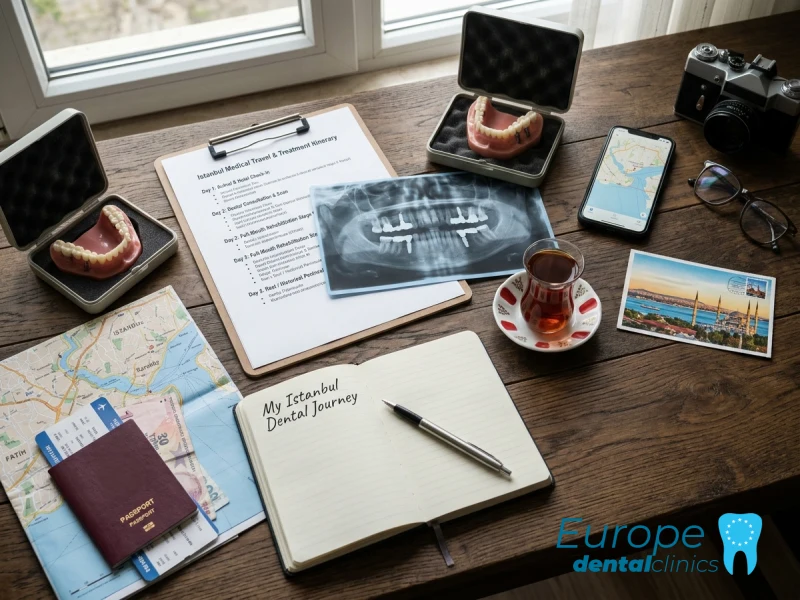
Full-mouth rehabilitation in Turkey involves rebuilding the health, function and appearance of most or all teeth through a personalised treatment plan. For European patients considering Istanbul, the first step is understanding which problems need treatment and whether care can be safely coordinated across borders.
Rehabilitation may combine gum treatment, fillings, crowns, bridges, orthodontics or dental implants. It does not automatically mean extracting every tooth or placing crowns on healthy teeth. A sound plan aims to preserve useful natural teeth wherever possible.
What Full-mouth Rehabilitation Can Treat
Dentists may recommend comprehensive rehabilitation for extensive decay, severe tooth wear, multiple missing teeth or a damaged bite. Some patients also have gum disease, jaw discomfort or difficulty chewing.
Cosmetic concerns alone do not establish a need for extensive restorative treatment. If your main concern is colour or mild unevenness, whitening, orthodontics or selective bonding may offer a more conservative approach.
Explore our dental treatment options, discover our clinic locations and meet our dentists for further information.
Assessment Before Dental Treatment in Turkey
An initial online consultation can help organise your visit, but photographs cannot establish a definitive diagnosis. Your dentist needs an examination, relevant X-rays, gum measurements and an assessment of how your teeth meet.
Medical history and treatment suitability
Tell the team about medicines, allergies, diabetes, smoking, previous dental problems and any history of grinding. These factors can affect healing, implant suitability and the expected maintenance burden.
Scans should be requested for a clinical reason. For implant planning, three-dimensional imaging may be needed to assess bone and nearby anatomical structures.
Treatment Options and Tooth Preservation
Your plan should identify which teeth can be maintained, which need repair and which have a poor prognosis. Ask for the reasons behind any proposed extraction.
- Fillings and onlays can restore selected damaged areas while conserving tooth tissue.
- Crowns and bridges may rebuild heavily damaged teeth or replace gaps, although preparation can remove substantial tooth tissue.
- Dental implants can support replacement teeth when suitable bone and gum health are present.
- Removable dentures may provide a less invasive alternative to extensive implant treatment.
Risks and Informed Consent
Full-mouth treatment carries biological, mechanical and aesthetic risks. These include sensitivity, infection, gum recession, altered speech, bite discomfort, restoration fracture and implant failure. Some prepared teeth may later require root canal treatment.
Informed consent means understanding the proposed procedures, alternatives, likely limitations and consequences of delaying treatment. Request a written plan in a language you understand, with time to consider irreversible decisions before treatment starts.
Planning Travel to Istanbul
The number and length of visits depend on your diagnosis. Gum stabilisation, extractions, bone grafting and implant healing can extend care over several months. An advertised short stay may cover only one stage.
Before booking flights, obtain a provisional schedule that includes assessment, treatment, reviews and contingency time. Your treating clinician should advise when you can fly after surgery, particularly if sinus procedures or complications are involved.
Aftercare and Follow-up Across Borders
Agree who will manage urgent problems once you return home. Ask whether the Istanbul clinic provides remote reviews, how an in-person reassessment is arranged and who pays for additional treatment or travel.
Request copies of your records, imaging and implant details where applicable. Ongoing hygiene visits, bite checks and repairs remain necessary; no rehabilitation is maintenance-free. Before committing, confirm that a dentist near home can provide appropriate follow-up and understands the proposed treatment.
How Treatment Is Sequenced
Full-mouth rehabilitation usually progresses through distinct clinical stages. Active disease is treated first, followed by reassessment before definitive reconstruction. A tooth that initially appears doubtful may become easier to evaluate once decay has been removed or gum inflammation has settled.
Testing the proposed bite
When treatment changes tooth height or jaw relationships, your dentist may use temporary restorations to assess comfort and function. This trial period can reveal difficulties with chewing, speech or muscle fatigue before the final restorations are made.
The Role of Temporary Teeth
Temporary teeth protect prepared surfaces and help you function between appointments. Their appearance and strength may differ from the finished restorations, and they can loosen or fracture.
Ask what you can eat during this stage and how to respond if a temporary restoration comes off. Avoid attempting repairs with household adhesives. If you will return to Europe wearing temporaries, obtain specific instructions and a realistic timeframe for the next stage.
Choosing Restorative Materials
Material selection should reflect the position of each tooth, available space, bite forces and the supporting tooth or implant. Zirconia, glass ceramics and metal-containing restorations have different properties; no single option is best for every situation.
Appearance and practical design
Discuss tooth shape, shade and surface texture using a mock-up or trial restoration where appropriate. Very bright or uniform teeth may look different in daylight than in clinic photographs. For bridges, the design must also allow access for cleaning beneath replacement teeth.
Understanding Immediate Implant Loading
Some patients receive a fixed temporary bridge soon after implant placement. This is called immediate loading, and suitability depends on factors including implant stability, bone conditions and bite control.
A same-day bridge does not mean healing is complete. Dietary restrictions and review appointments remain essential while implants integrate with bone. Your plan should explain what happens if adequate stability cannot be achieved during surgery, including whether a removable temporary replacement would be needed.
Comparing Written Quotations
Compare quotations by clinical scope rather than the headline total. A useful quotation separates diagnostic work, disease control, temporary restorations, definitive restorations and laboratory fees. It should also identify procedures that might become necessary after examination.
- Confirm the number of teeth or implants included.
- Check whether sedation, grafting and prescribed medicines carry separate charges.
- Establish the currency, payment stages and cancellation terms.
- Allow for accommodation, time away from work and possible extra visits.
Assessing the Team and Communication
Establish which clinician will coordinate your rehabilitation and who will perform each procedure. Complex cases may require input from dentists with different areas of expertise. Verify professional registration and ask about experience with cases resembling your own.
Clear communication matters throughout a long treatment course. If you need an interpreter, establish how clinical explanations and consent discussions will be translated. You should be able to describe symptoms directly and receive understandable answers, including when your usual clinician is unavailable.
Dry Mouth and the Risk of Further Decay
Reduced saliva can make rehabilitation harder to maintain because saliva helps protect teeth against acid and decay. Dry mouth may relate to medicines, certain medical conditions or previous treatment affecting the salivary glands.
Tell your dentist if you frequently need water to swallow dry foods or wake with a sticky mouth. Management may include reviewing contributing factors with your doctor, saliva substitutes and prescribed fluoride products. Do not stop prescribed medicines without medical advice.
Managing Tooth Grinding and Clenching
Bruxism, the grinding or clenching of teeth, can place substantial forces on restorations. Signs include worn edges, repeated fractures and morning jaw muscle discomfort, although these symptoms can have other causes.
If grinding is suspected, the treatment plan may need adjustments to restoration design and materials. A custom protective splint may be recommended once the bite is stable. It can help protect teeth and restorations, but it does not reliably eliminate grinding.
Sedation and Recovery Arrangements
Extensive dentistry can sometimes be completed under local anaesthetic over several appointments. Sedation may help selected patients with anxiety or lengthy procedures, following an assessment of medical suitability.
Preparing for a sedated appointment
Ask which sedation method is proposed, who administers it and what monitoring is provided. Follow the team’s specific instructions about eating, drinking and regular medicines. Depending on the method, you may need a responsible adult to escort you and remain with you afterwards.
Plan recovery separately from sightseeing. Driving, drinking alcohol and making important decisions may be restricted for a defined period after sedation.
Eating During Healing
Your diet may need to change temporarily after surgery or while wearing provisional restorations. Choose foods that meet your clinician’s texture restrictions while providing adequate protein and energy, such as eggs, yoghurt or suitably prepared pulses.
Soft food does not necessarily mean low sugar. Frequent sweet drinks and snacks can increase decay risk around remaining natural teeth. Ask when and how to progress towards firmer foods; comfort alone does not confirm that surgical sites can tolerate normal chewing forces.
Recognising Problems That Need Prompt Care
Some tenderness and swelling can be expected after certain procedures, but symptoms should follow the recovery pattern your clinician describes. Increasing pain, fever, pus, persistent bleeding or a suddenly loose restoration warrant prompt professional assessment.
Rapidly spreading facial or neck swelling, difficulty swallowing or difficulty breathing require urgent medical attention. Seek local emergency care rather than waiting for a reply from an overseas clinic. Avoid chewing on a loose bridge or crown until a dentist assesses it.
Reviewing the Finished Restorations
Before the final fitting is completed, discuss whether the agreed appearance has been achieved and report any concerns about speech or comfort. The dentist should check contacts between teeth, bite relationships and access for cleaning.
Describe specific problems, such as one tooth meeting first or food repeatedly trapping in an area. Some adjustments may be needed after use, but persistent pain or difficulty chewing deserves reassessment rather than an assumption that you simply need to adapt.
Building a Daily Cleaning Routine
Cleaning methods should match the restorations you receive. Brush twice daily with fluoride toothpaste, paying attention to the gum margins. Spit out the excess after brushing and avoid rinsing immediately, unless your dentist gives different instructions for a prescribed product.
Cleaning beneath fixed bridges
Implant bridges and linked restorations often need interdental brushes or threaded floss to reach underneath them. Ask your dental team to demonstrate the correct sizes and technique in your mouth. A water flosser may help as an additional aid, but its suitability depends on the restoration design.
Protecting Gum Health Around Implants
Implants cannot develop tooth decay, but the tissues surrounding them can become inflamed. Peri-implant mucositis affects the soft tissues, while peri-implantitis involves inflammation with loss of supporting bone.
Bleeding during cleaning, swelling or an unpleasant taste should be assessed, even when there is no pain. Professional monitoring may include measurements around implants and comparison with baseline records. Early assessment gives the team an opportunity to address inflammation before further damage occurs.
Smoking and Surgical Healing
Smoking increases the risk of poor wound healing and complications affecting implants and their supporting tissues. Tell your clinician how much you smoke and whether you use other tobacco or nicotine products.
Agree a cessation plan before surgery where possible. Vaping should also be discussed because it cannot be assumed harmless during recovery. Your dentist or doctor can help you choose appropriate support; the timing and type should reflect your medical circumstances and planned procedures.
Responding to Changes in the Treatment Plan
Unexpected findings can emerge after treatment begins, such as a crack beneath an old restoration. Before additional irreversible work proceeds, ask for an explanation of the finding, the available options and any effect on fees or scheduling.
Consent is an ongoing process. You can decline a proposed procedure or request time to consider it. If treatment is already underway, the clinician should explain how the area can be made safe and what temporary care is possible while you decide.
Understanding Warranties and Complaint Routes
A clinic’s warranty is a contractual arrangement with conditions and exclusions. Obtain the wording before paying, including requirements for maintenance, what counts as a covered failure and whether laboratory work, professional fees or return travel are included.
Ask for the clinic’s formal complaints procedure and the legal identity of the treatment provider. Cross-border disputes may involve unfamiliar legal processes. Keep copies of signed agreements, invoices and correspondence, and check whether your travel insurance excludes planned dental treatment or related complications.
Allowing Time for an Independent Opinion
A second clinical opinion can be useful when recommendations involve removing many teeth, extensive preparation or a major change to your bite. Provide the examining dentist with available records so they can assess the reasoning behind the proposal.
Different recommendations do not automatically mean one is wrong. Ask each clinician to explain the prognosis of key teeth and the trade-offs between options. Make your decision when you understand those differences, without allowing a flight booking or promotional deadline to determine clinical timing.
Frequently asked questions
What is full-mouth rehabilitation in Turkey?
Full-mouth rehabilitation is a personalised treatment plan to restore the health, function and appearance of most or all teeth. It may combine gum treatment, fillings, crowns, bridges, dental implants, dentures or orthodontics. Clinics in Turkey may use the term differently, so ask for a written diagnosis and an explanation of why each procedure is recommended.
Who may benefit from full-mouth rehabilitation?
It may help people with extensive tooth wear, multiple missing teeth, widespread decay, damaged restorations or difficulty chewing. Suitability depends on gum health, the condition of remaining teeth, bone support, medical history and expectations. An in-person examination and appropriate imaging are needed before a definitive plan can be agreed.
Does full-mouth rehabilitation require every tooth to be crowned or removed?
No. Treatment should reflect the condition and outlook of each tooth. Healthy teeth may need no treatment, while damaged teeth may be suitable for fillings, onlays or crowns. Extraction is irreversible and should have a clear clinical justification. If a proposed plan involves extensive drilling or removal of teeth that could be retained, consider an independent second opinion.
How much does full-mouth rehabilitation cost in Turkey?
Costs vary substantially according to the number of teeth treated, the procedures required, the materials used and the complexity of care. Request an itemised quotation covering diagnostics, temporary restorations, laboratory work, implants and their components, medicines and follow-up appointments. Check whether grafting, sedation, travel and accommodation are included, and how the price could change after examination.
How many visits to Turkey are usually needed?
The number of visits depends on the treatment plan. Some restorative work can be completed during one visit, although complex rehabilitation may require staged appointments and time to assess temporary restorations. Implant treatment commonly involves separate surgical and restorative visits with several months of healing between them. Bone grafting or treatment for gum disease can extend the schedule.
Can dental implants and permanent teeth be fitted during the same trip?
Selected patients may receive a fixed temporary bridge soon after implant placement when implant stability and other clinical conditions allow. This is often advertised as “teeth in a day”, but it does not mean healing is complete. The final bridge is frequently fitted later, and immediate loading is unsuitable for some patients. Ask whether the quoted teeth are temporary or definitive.
How can I assess a Turkish dental clinic before booking?
Check the treating dentists’ professional registration, relevant training and experience with cases similar to yours. Confirm any authorisation required for treating international patients, and ask who will perform each stage. A thorough consultation should explain the diagnosis, alternatives, risks, materials and aftercare. Reviews and before-and-after photographs can provide context, but they do not establish clinical quality on their own.
What are the risks of full-mouth rehabilitation?
Risks depend on the procedures and can include pain, sensitivity, infection, gum recession, bite discomfort, restoration fracture and implant failure. Preparing teeth for crowns can sometimes lead to a later need for root canal treatment. Smoking, poorly controlled diabetes, active gum disease and tooth grinding may increase complications. Your dentist should explain your individual risks before you consent.
Which materials are used for full-mouth rehabilitation?
Common options include zirconia, lithium disilicate ceramics, metal-ceramic restorations and acrylic or composite materials for certain bridges and dentures. The appropriate choice depends on the restoration’s position, available space, bite forces, appearance and ease of repair. Ask for the exact material, implant system where relevant, and whether each restoration is temporary or definitive.
What aftercare is needed when I return home?
Long-term care includes brushing twice daily with fluoride toothpaste, cleaning between teeth and beneath bridges, and attending dental reviews at intervals suited to your needs. Arrange who will assess any problems after you return, and obtain treatment records, imaging and implant details. Clarify what any guarantee covers and who pays for corrective treatment and travel. Seek urgent local care for spreading swelling, fever, uncontrolled bleeding or difficulty swallowing or breathing.
