


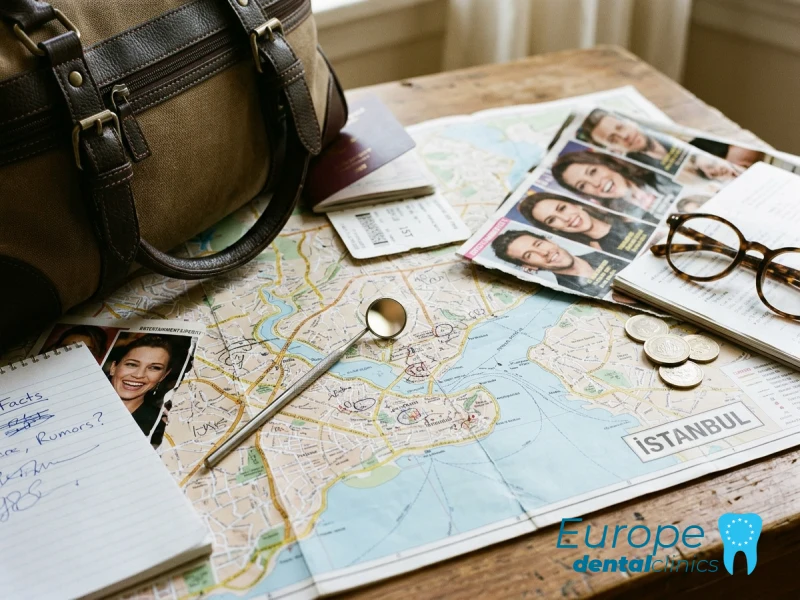
Celebrity smile transformations attract attention because small changes to teeth can alter how a face looks on screen. Yet photographs rarely explain what happened. Whitening, orthodontics, restorations, lighting and image editing can produce overlapping effects. For European patients considering cosmetic dentistry in Istanbul, separating confirmed information from speculation is a useful first step towards making an informed treatment decision.
Confirmed Facts Versus Rumours About Celebrity Teeth
A celebrity’s dental treatment should be described as confirmed only when reliable public evidence supports that description. A direct account from the person can establish what they have chosen to disclose, although it may leave clinical details unclear.
Without reliable confirmation, claims about a named celebrity having veneers, crowns or dental implants remain unverified. Repetition across entertainment websites does not turn an assumption into a fact.
Public Statements Have Limits
Someone saying they had their “teeth done” does not identify a procedure. Even a reference to veneers may omit the material, number of teeth treated or amount of preparation. Responsible reporting preserves those gaps instead of filling them with guesses.
Explore our dental treatment options, discover our clinic locations and meet our dentists for further information.
Why Before-and-After Photographs Cannot Prove Treatment
Photographs can show an apparent change, but they cannot establish its cause. Camera angles, exposure, lipstick, facial expression and filters all affect how teeth appear. Pictures taken years apart may also reflect natural ageing or changes in gum health.
A brighter smile does not prove whitening, and straighter-looking teeth do not prove veneers. Dentists need an examination and, where clinically justified, imaging to assess teeth and recommend treatment.
Treatments That Can Change a Smile
Whitening, Orthodontics and Composite Bonding
Professional whitening lightens natural teeth but does not change their position or the colour of existing crowns and fillings. Temporary sensitivity and gum irritation can occur.
Orthodontic treatment moves teeth and usually requires retainers afterwards. Composite bonding adds tooth-coloured resin to adjust shape or repair small defects; it can stain, chip and need maintenance.
Veneers and Crowns
Veneers cover the front surface of teeth, while crowns cover more of the tooth. Preparation may involve irreversible removal of tooth tissue. Possible complications include sensitivity, fracture, decay around restoration edges and, sometimes, a later need for root canal treatment.
Why a Celebrity Smile Is Not a Treatment Plan
A photograph can help explain preferences, such as softer edges or a less bright shade. However, copying another person’s tooth shape may conflict with your bite, gum position, facial proportions or available tooth structure.
Healthy teeth deserve a conservative assessment. Alternatives may include whitening, orthodontics, limited bonding or no treatment. Crowns should have a clear clinical justification, particularly when proposed for otherwise intact teeth.
Considering Cosmetic Dentistry in Istanbul
Before arranging travel to Turkey, request an individual assessment, the treating dentist’s credentials and a written explanation of the proposed procedures. An online quotation is provisional: examination may change the diagnosis, suitability or treatment sequence.
Compare the full commitment, including travel, accommodation, maintenance and potential return visits. Leave enough time for assessment and adjustments rather than allowing flight dates to determine clinical decisions.
Consent, Aftercare and Follow-Up Begin Before Travel
Valid consent requires understandable information about benefits, risks, alternatives and costs. Ask who will manage complications after you return home, what follow-up is included and how to obtain your clinical records. Aftercare arrangements should be clear before treatment begins.
How to Assess Reports of Celebrity Dental Work
Look for the original interview, video or statement behind a headline. Check whether the person describes completed treatment, a temporary cosmetic change or simply an intention. The publication date also matters: an older account may not explain their current appearance.
A dentist commenting on photographs is offering an opinion unless they have direct knowledge and permission to disclose it. Professional qualifications do not turn a visual guess into verified treatment history.
Recognising Misleading Smile Makeover Marketing
Celebrity images beside a clinic advertisement do not establish that the person attended that clinic or endorsed its services. Treat implied associations cautiously, particularly when no clear explanation accompanies the photograph.
Patient photographs are more useful when lighting, angles and image processing are consistent. Even then, they show selected outcomes. They cannot establish how comfortable the bite feels, whether gums remain healthy or how restorations perform over time.
Assessing Your Oral Health Before Cosmetic Changes
A cosmetic consultation should include assessment for decay, gum disease, tooth wear and existing restorations. Bleeding gums or persistent sensitivity may need investigation before appearance is addressed. Medical conditions, medicines and smoking can also influence treatment planning and healing.
Grinding and Bite Problems
Clenching or grinding can place extra force on teeth and restorations. Discuss worn edges, morning jaw discomfort or previous fractures with your dentist. A protective appliance may be recommended, although it cannot eliminate every cause of damage.
Understanding Previews and Temporary Restorations
Digital smile designs can help communicate proposed proportions, but an image cannot predict every biological or technical outcome. A physical mock-up may allow you to assess aspects of appearance, speech and lip support before committing to certain changes.
Where temporary restorations are needed, use the review appointment to report discomfort, difficulty cleaning or an uneven bite. Ask which changes remain possible at that stage. Approval should follow a clear explanation of what the preview can realistically demonstrate.
Planning Recovery Around Your Journey Home
Recovery depends on the procedure and your health. Extractions, implant surgery and grafting need different arrangements from bonding or whitening. Obtain individual advice about flying, exercise, diet and the timing of your final review; there is no single travel timetable suitable for every patient.
Symptoms Requiring Prompt Attention
Contact a dentist promptly for increasing pain, persistent bleeding, fever or swelling that worsens. Difficulty breathing or swallowing requires emergency care. Avoid postponing urgent assessment while waiting for a response from an overseas clinic.
Keeping Records and Understanding Patient Protections
Request copies of your treatment plan, consent documents, radiographs and invoices. For implants, obtain the manufacturer, system and component details where available, as these may help another dentist provide future care.
Before paying a deposit, read cancellation, remedial treatment and complaints terms. Establish which legal entity provides your care and where disputes would be handled. Check insurance wording directly: routine travel policies may exclude planned dental treatment and related complications. Written policies help clarify responsibilities, but they do not guarantee reimbursement or a particular clinical result.
Choosing a Tooth Shade That Suits Your Smile
The brightest shade on a sample guide will not suit every person. Natural teeth have variations in colour and translucency, while highly opaque restorations may look different in daylight and under indoor lighting. Discuss the appearance you prefer in ordinary settings, beyond photographs.
If whitening forms part of your plan, its timing matters. The colour should stabilise before a dentist selects shades for visible bonding or ceramic restorations. Existing dental work will not whiten alongside natural enamel.
Understanding Materials Beyond Marketing Names
Terms such as “Hollywood smile” describe an aesthetic idea, not a standardised dental procedure. Likewise, a material name alone does not explain how much tooth preparation is proposed or whether a restoration suits your bite.
Ceramics and Composite Resin
Material selection depends on the tooth’s condition, available space, biting forces and aesthetic requirements. Different ceramics have different optical and mechanical properties. Composite resin can often be repaired directly, while damaged ceramic may require laboratory work or replacement. Ask how the proposed material affects future maintenance.
The Role of Gums in Smile Appearance
Gum levels influence how long and symmetrical teeth appear. However, an uneven gumline does not automatically require surgery. Inflammation, tooth position and differences in tooth eruption can each affect the visible outline.
Gum contouring removes tissue, and some procedures also involve underlying bone. Potential consequences include sensitivity, recession and open spaces between teeth. A periodontal assessment helps establish whether treatment is appropriate and how healing could affect the final result.
Why Implants Are Not a Cosmetic Shortcut
Dental implants replace missing teeth or teeth that cannot reasonably be retained. They do not provide a routine upgrade for healthy natural teeth. Removing a maintainable tooth creates an irreversible change and introduces surgical considerations.
Implant treatment can involve several stages, depending on bone support, infection and healing. Risks include failure to integrate, damage to nearby structures and inflammation around the implant. An implant-supported tooth still needs daily cleaning and professional monitoring.
Living With Restorations Over Time
Veneers, crowns and bonding have no guaranteed lifespan. Their condition depends partly on oral hygiene, diet, bite forces and regular dental care. Repeated replacement may require further treatment as the underlying tooth changes.
Daily Habits That Protect Dental Work
Brush twice daily with fluoride toothpaste and clean between teeth using methods suited to your restorations. Avoid biting fingernails, opening packaging with teeth or chewing ice. Report food trapping, a loose restoration or a newly rough edge before the problem becomes more extensive.
Setting Personal Goals Beyond Celebrity Comparisons
Consider which specific feature troubles you and how much intervention you would accept to change it. A minor irregularity may be noticeable to you without needing treatment. Keeping some natural variation can also be an intentional aesthetic choice.
Allow time to reflect if a proposed makeover expands substantially beyond your original concern. A second clinical opinion can help you assess the reasoning, particularly when multiple healthy teeth would undergo irreversible preparation.
Distinguishing Missing Evidence From a Denial
When a celebrity has not discussed their teeth, the accurate conclusion is that their treatment history is unknown. Silence does not confirm a procedure, but it does not establish that no treatment occurred either. This distinction keeps reporting factual without making assumptions about private healthcare.
Similarly, a public denial of one procedure does not identify another. Saying someone has denied veneers would not justify claiming they had bonding instead. Each assertion needs its own supporting evidence.
Understanding Changes in Speech and Sensation
Changes to tooth length, thickness or position can affect how your tongue meets your teeth. Some people notice altered pronunciation or increased awareness of their bite after restorative treatment. Discuss any work commitments involving speaking or singing during planning.
A short period of adjustment may occur, but persistent speech difficulties, jaw discomfort or an inability to bring teeth together comfortably deserve review. Aesthetic approval and functional comfort are separate parts of assessing the result.
Communicating Clearly Across Languages
For patients travelling from Europe, conversational English at reception does not necessarily establish how clinical discussions will be conducted. Confirm which language your treating dentist uses and whether a suitably qualified interpreter is available when needed.
Making Clinical Discussions Understandable
Ask for unfamiliar terms to be explained in plain language. You should understand which teeth are involved and what each procedure entails. If an interpreter assists, establish their role and any additional charge. Keep a copy of the documents in a language you understand.
Preparing for Sedation and Practical Support
If sedation is proposed, discuss why it is recommended, who will administer it and what monitoring will be used. Your team needs an accurate medical history, including medicines, supplements, allergies and previous reactions to anaesthesia.
Sedation can affect judgement and coordination. Follow the provider’s instructions about fasting, an accompanying adult, transport and supervision afterwards. Do not assume that travelling alone or taking a taxi back to a hotel will meet the required arrangements.
Comparing Payment Terms Across Borders
A written estimate should identify the currency, payment schedule and circumstances that could change the total. Exchange rate movements, card charges and bank transfer fees can affect what leaves your account, even when the clinic’s quoted amount stays the same.
Clarify how additional findings will be discussed and authorised before extra work begins. If finance is offered, assess the repayment terms separately from the treatment decision. A monthly instalment does not show the full borrowing cost.
Separating Permission for Treatment From Publicity
Clinics may request photographs for clinical records and separately seek permission to use images in advertising or social media. Ask which use is proposed, whether your face or name would appear and how the images would be stored or shared.
Consent to publicity should be considered separately from consent to dental care. Before accepting any discount linked to promotional participation, read the conditions carefully, including how withdrawal requests would affect future use of your images.
Frequently asked questions
What counts as a confirmed celebrity smile transformation?
A transformation is best supported by the celebrity’s own account, an authorised statement from their dental professional, or reliable reporting that quotes those sources directly. Photographs can establish that a smile looks different, but they rarely establish the treatment behind it. Confirmation of one procedure also does not confirm every detail circulating online.
Can before and after photographs prove that a celebrity has veneers?
No. Veneers are one possible explanation for changes in tooth shape, colour or spacing, but crowns, composite bonding and orthodontic treatment can produce overlapping results. Lighting, camera angles, make-up and image editing also affect appearances. Without a reliable disclosure, claims that photographs “prove veneers” remain speculation.
What is confirmed about Tom Cruise wearing braces?
Tom Cruise was publicly photographed wearing braces in 2002, so his use of a visible orthodontic appliance is documented. Those photographs do not establish his complete dental history, the precise treatment plan or whether he had other cosmetic procedures. Broader claims about veneers or crowns require separate evidence.
Did Niall Horan publicly document his orthodontic treatment?
Yes. Niall Horan wore visible braces during his early One Direction years and publicly celebrated their removal in 2013. His orthodontic treatment is therefore documented. Claims that he also received veneers, implants or other cosmetic treatment need their own supporting evidence; they cannot be inferred simply from his straighter smile.
What did Dakota Johnson say about the gap between her front teeth closing?
During a 2019 appearance on The Tonight Show Starring Jimmy Fallon, Dakota Johnson said she had worn a permanent retainer since adolescence and that her gap closed after its removal. This is her publicly stated explanation. Describing the change as confirmed veneers or bonding would go beyond what that account establishes.
Does a much whiter celebrity smile confirm professional whitening?
No. Professional whitening is one possibility, but brighter teeth can also reflect restorations, different lighting, photographic exposure or digital retouching. Even when whitening is confirmed, photographs cannot reliably identify the product, concentration or number of sessions. A visibly brighter smile supports an observation about appearance, not a precise treatment claim.
Can a dentist identify a celebrity’s dental work from photographs alone?
A dentist can discuss plausible explanations for visible changes, but photographs alone usually cannot establish a complete treatment history. An examination, dental records and sometimes radiographs would provide information that publicity images lack. Commentary from a dentist who has not treated the celebrity should be understood as an opinion, unless supported by independent confirmation.
Are veneers, crowns, bonding and implants interchangeable explanations?
No. Veneers cover the front surfaces of teeth, crowns cover prepared teeth more extensively, and composite bonding adds tooth-coloured resin to alter shape or repair defects. Dental implants replace missing tooth roots and support restorations. Calling every celebrity smile transformation “implants” or “veneers” can misrepresent substantially different treatments.
How reliable are online claims about the cost of a celebrity’s new smile?
Unless the celebrity or an authorised source has disclosed the amount, a quoted total is generally an estimate. Costs depend on the treatment, number of teeth involved, clinician, location and any preparatory care. Even a confirmed procedure does not establish its price, and a clinic’s advertised fees do not prove what a particular celebrity paid.
How can readers check a celebrity smile rumour responsibly?
Look for the original interview, public statement or reputable report, then check exactly what it confirms. Distinguish the celebrity’s words from a commentator’s interpretation, and check whether photographs have reliable dates and comparable conditions. When no treatment has been disclosed, the accurate conclusion is that the cause of the visible change remains unconfirmed.
